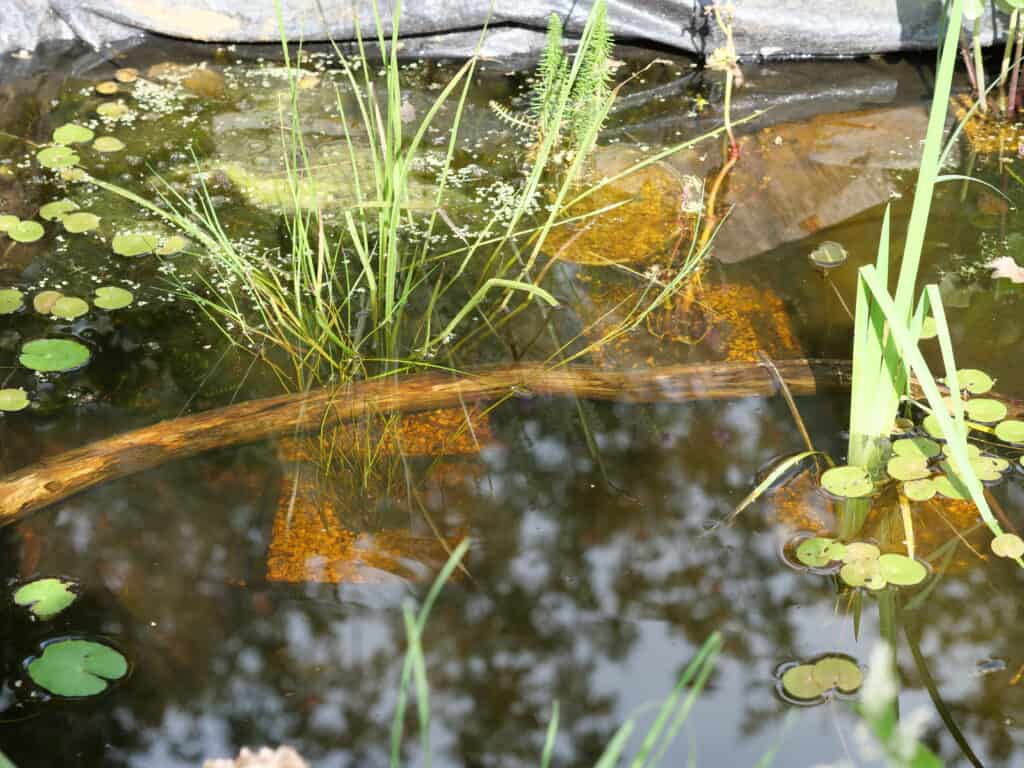
Oxygenator plants help to keep ponds clear and healthy, reduce algae and they also encourage wildlife.
Spiked Water-Milfoil
Attractive, feathery leaves are held just below the surface of the water, but its tiny, reddish flowers emerge on spikes during June and July. It provides shelter for many aquatic creatures and emergent stems offer places for dragonflies and damselflies to alight and lay their eggs.
Rigid Hornwort
It is a floating oxygenator and has no roots with stems that grow from 30-90cm (1-3ft) that have delicate dense whorls of slender dark green leaves. It sinks to the bottom of the pond in winter to protect itself from the cold and ice and may turn black but as the water warms in the spring it will float back up and turn green again.
Water Violet
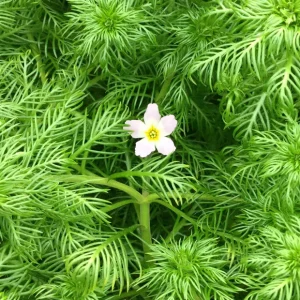
The Water-violet is not actually a Violet, but rather a species of Water Primrose. Water-violet is widespread in the south-east of England but has undergone a significant decline in recent years and is now included on the Red Data List for England. Threats include habitat loss, drainage and poor management. The submerged nature of Water-violet make it very susceptible to water quality.
Common Water Crowfoot
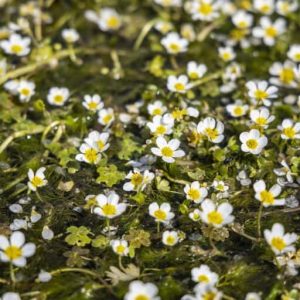
. The submerged leaves are divided into thread-like segments and palmate floating leaves. In summer it produces solitary, white flowers. These pretty flowers are also useful for wildlife as they provide food for bees, butterflies, beetles and other insects as well as providing cover for small fish. The submerged leaves help reduce unwanted algae.
Frogbit
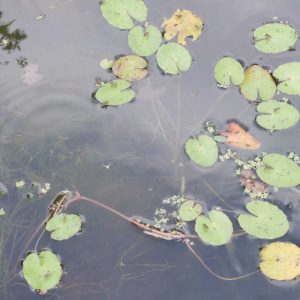
Is a small floating plant resembling a small water lily. It bears small, three-petalled white flowers. The floating green leaves are kidney-shaped and grow in rosettes on the water surface, with the roots hanging down into the water column, part submerged but not normally touching bottom. Frogbit is fast growing and spreads rapidly by stolons, surviving the winter as dormant turions which rest on the bottom as a submerged plant, rising again to the surface in spring.
Marginals
Marginal plants are those which grow around the margins of the pond where the water is shallow. They usually have their soil and crown underwater, and sometimes their lower foliage as well. They are generally placed on planting shelves within the pond.
Water Forget-Me-Not
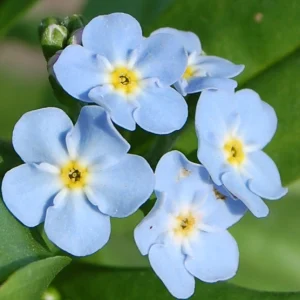
Water forget-me-not was once more commonly known as ‘Scorpion-grass’ because its curled clusters of sky-blue flowers resembled a scorpion’s tail.
The common name of Water forget-me-not was most likely popularised by its use in Samuel Taylor Coleridge’s poem, The Keepsake. He was familiar with a German tale of a knight who was strolling along a river with his lady when he fell in. Just before he stumbled, he had picked some pretty blue flowers; throwing them to his love, he exclaimed ‘forget-me-not’ as he drowned.
Bogbean
The starry, white flowers of Bogbean can bring the green waters of a pond to life in spring -c perennial blooms from March until June. Its common name comes from the leaves, which are shaped a little like those of broad beans.
The bogbean has been used as a herbal remedy to try and cure rheumatoid arthritis, scurvy, upset stomach, indigestion and loss of appetite. The leaves were used in flavouring beer as an alternative to hops
Water Mint
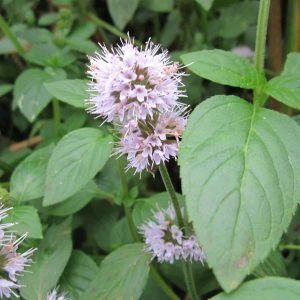
It has a distinctive mint smell and produces a profusion of lilac coloured flowers in ball like clusters. It is a good plant to have for attracting wildlife. It provides egg laying opportunities for flying wildlife such as dagonflies as well as shelter for emerging aquatic wildlife and frog spawn. When in bloom it is a valuable food source for pollinators.
Marsh Marigold
The large, golden flowers of Marsh-marigold certainly look like the cups of kings; indeed, the Latin name, Caltha,is derived from the Greek for ‘goblet’, and this plant is also commonly known as ‘Kingcup’. The Spring flowering Marsh Marigold provides shelter for frogs and early nectar for bees, butterflies and hoverflies.
Flowering Rush
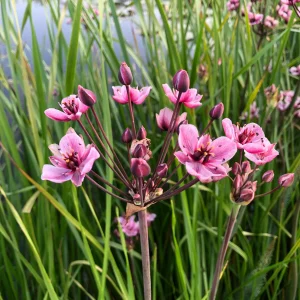
Pink flowering rush (Butomus umbellatus) is a native pond plant. It has heads of pretty, rose pink flowers in July and August which are higher than the leaves. Tall (up to 90cm), emergent plants such as the Flowering Rush provide habitat for pond insects, especially emerging dragonflies and damselflies.
Water Plantain
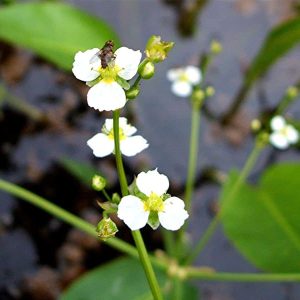
A beautiful plant with attractive clumps of foliage and masses of delicate pale pink or white flowers all summer. The flowers are held on upright stems, each flower has three petals and is attractive to bees and hoverflies.
Cotton Grass
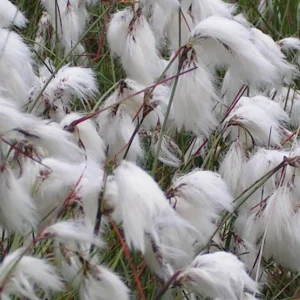
Cotton Grass (Eriophorum Angustifolia) a native shallow water, marginal pond plant. This sedge forms neat mounds of dark green leaves from which grow the fluffy cotton-wool like tufts of the seedheads hence the name.
Monkey Flower
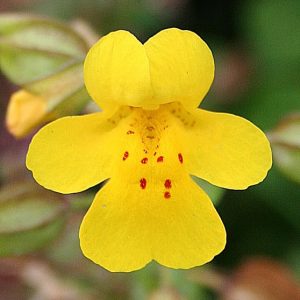
Mimulus guttatus – Monkey Flower. A wildlife friendly plant that produces yellow flowers with some reddish spots. Flowering throughout the summer this plant is happy in both pond margins and boggy areas.
Purple Loosestrife
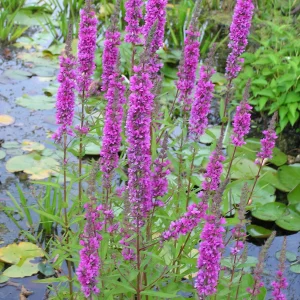
Purple loosestrife (Lythrum salicaria) native Marginal plants. A tall wildflower that grows naturally on banks of streams and around ponds. It has strong, upright stems, topped in summer with long, poker-like heads of bright purple-red flowers. This wonderful plant is perfect for pollinators. When in flower purple loosestrife is beneficial for bees, butterflies and hoverflies due to the long flowering period.
Deeper Water Plants
Our deep water plants are both Oxygenators, helping to keep the pond clear and healthy.
Mare’s Tail
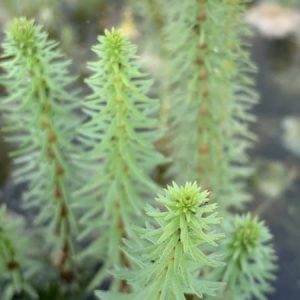
Mares tail (Hippuris Vulgaris) Oxygenator. This plant has stems clad with whorls of soft blue-green foliage and appear like a small pine forest under the water, truly beautiful.
Mares tails provide useful cover for small fish and other pond wildlife as well as being excellent for maintaining clean, healthy water.
Floating Heart
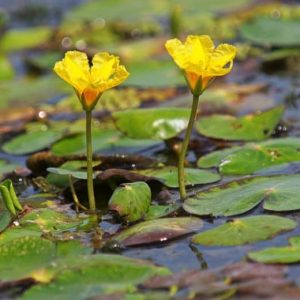
Nymphoides peltata is a vigorous native aquatic plant and it quickly forms a dense carpet of miniature waterlily-like, mottled leaves, punctuated from June to July by tall, bright yellow flowers with fringed petals. It play a key role in cleaning and filtering the water, reducing algae, and providing wildlife habitats.The fast growth rate of this plant makes it a useful ‘starter plant’ for a new pond,